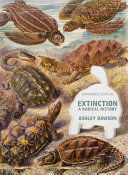
EXTINCTION

EXTINCTION

A RADICAL HISTORY

DAWSON, ASHLEY

$ 425.00
IVA incluido
Editorial:
OR BOOKS
Año de edición:
2022
Materia
Crisis climática
ISBN:
978-1-68219-299-3
Páginas:
176

Disponibilidad:

  • Librería U-tópicasAgotado
  • FIL GUADALAJARAAgotado

Some thousands of years ago, the world was home to an immense variety of large mammals. From wooly mammoths and saber-toothed tigers to giant ground sloths and armadillos the size of automobiles, these spectacular creatures roamed freely. Then human beings arrived. Devouring their way down the food chain as they spread across the planet, they began a process of voracious extinction that has continued to the present.

Headlines today are made by the existential threat confronting remaining large animals such as rhinos and pandas. But the devastation summoned by humans extends to humbler realms of creatures including beetles, bats and butterflies. Researchers generally agree that the current extinction rate is nothing short of catastrophic. Currently the earth is losing about a hundred species every day.

This relentless extinction, Ashley Dawson contends in a primer that combines vast scope with elegant precision, is the product of a global attack on the commons, the great trove of air, water, plants and creatures, as well as collectively created cultural forms such as language, that have been regarded traditionally as the inheritance of humanity as a whole.

This attack has its genesis in the need for capital to expand relentlessly into all spheres of life. Extinction, Dawson argues, cannot be understood in isolation from a critique of our economic system. To achieve this we need to transgress the boundaries between science, environmentalism and radical politics. Extinction: A Radical History performs this task with both brio and brilliance.
Artículos relacionados

    1
  • NO ES POSIBLE DE OTRA MANERA PERO OTROPS MUNDOS SON POSIBLES
    HERNANDEZ, LUIS HUMBERTO
    Se considera que, desde los años setenta del siglo XX, nuestra civilización vive un periodo de transición que irá hasta el año 2050. Año a partir del cual se desplegará una nueva época civilizatoria, que denominamos del Procomún colaborativo o Transmoderna, que va a reemplazar la Época moderna vigente desde los siglos XVI-XVII. Un cambio debido a la emergencia de dos nuevos gir...

    $ 205.00

  • EL CREPÚSCULO DE LA ERA TRÁGICA DEL PETRÓLEO
    FERNÁNDEZ DURÁN, RAMÓN
    El fin de la Era del Petróleo está ya en el horizonte. Ese fin no acontecerá cuando se acabe el petróleo, sino bastante antes, cuando se inicie y profundice el declive de su oferta, a partir del llamado pico del petróleo, tal y como alerta este texto. Pero esta Era del Petróleo que hemos vivido especialmente en el siglo XX, y muy en concreto en su segunda mitad, una etapa de cr...

    $ 310.00

  • EL DESIERTO QUE VIENE
    DAVIS, MIKE
    En este iconoclasta folleto, Mike Davis explora la genealogía del cambio climático antropogénico, reconociendo su rastro desde la Grecia antigua hasta la desastrosa sequía de 2007-2010 en Siria. La desecación, la deforestación, el colonialismo europeo y la agricultura extensiva han cambiado profundamente los climas «locales» alterando sus ciclos. No obstante, fue el «descubrimi...

    $ 281.00

  • EL FUTURO DE LA REVOLUCIÓN
    MATTHEW T. HUBER
    Por mucha propaganda negruzca y viscosa que las compañías petrolíferas quieran verter sobre nosotros, la crisis climática no es un problema de «huellas de carbono» individuales ni de grandes soluciones tecnocientíficas: en realidad, la responsabilidad del calentamiento global arraiga en una ínfima minoría capitalista. ...

    $ 609.00

  • ANTROPOCENO, EL (2A ED)
    FERNÁNDEZ DURÁN, RAMÓN
    En los últimos años, el término «antropoceno» ha sido objeto de intensos debates en torno a su significado y a sus implicaciones históricas y políticas. En algunos casos, se ha asimilado la idea de destrucción del medioambiente por causas antropogénicas a una acusación contra una «humanidad» abstracta, ahistórica y descontextualizada, cuya mera existencia sería condición sine q...

    $ 260.00

  • LOS MITOS DEL MEDIO AMBIENTE
    SERGIO FEDEROVISKY
    ¿Se puede detener el deterioro del planeta si cada persona, individualmente, procura reciclar en su casa la basura que genera, trata de gastar menos agua, utiliza un coche híbrido o cumple alguna de las muchas consignas que desde los ámbitos de poder se difunden constantemente cada día? Ante esta sobreabundancia de «soluciones mágicas» Sergio Federovisky dice que el problema no...

    $ 370.00