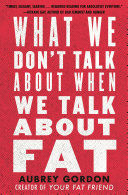
WHAT WE DON'T TALK ABOUT WHEN WE TALK ABOUT FAT

WHAT WE DON'T TALK ABOUT WHEN WE TALK ABOUT FAT

GORDON, AUBREY

$ 385.00
IVA incluido
Agotado
Editorial:
BEACON PRESS
Año de edición:
2021
Materia
Corporalidades
ISBN:
978-0-8070-1477-6
Páginas:
208

An explosive indictment of the systemic and cultural bias facing plus-size people that will move us toward creating an agenda for fat justice.

Anti-fatness is everywhere. In What We Don’t Talk About When We Talk About Fat, Aubrey Gordon unearths the cultural attitudes and social systems that have led to people being denied basic needs because they are fat and calls for social justice movements to be inclusive of plus-sized people’s experiences. Unlike the recent wave of memoirs and quasi self-help books that encourage readers to love and accept themselves, Gordon pushes the discussion further towards authentic fat activism, which includes ending legal weight discrimination, giving equal access to health care for large people, increased access to public spaces, and ending anti-fat violence. As she argues, “I did not come to body positivity for self-esteem. I came to it for social justice.”

By sharing her experiences as well as those of others—from smaller fat to very fat people—she concludes that to be fat in our society is to be seen as an undeniable failure, unlovable, unforgivable, and morally condemnable. Fatness is an open invitation for others to express disgust, fear, and insidious concern. To be fat is to be denied humanity and empathy. Studies show that fat survivors of sexual assault are less likely to be believed and less likely than their thin counterparts to report various crimes; 27% of very fat women and 13% of very fat men attempt suicide; over 50% of doctors describe their fat patients as “awkward, unattractive, ugly and noncompliant”; and in 48 states, it’s legal—even routine—to deny employment because of an applicant’s size.

Advancing fat justice and changing prejudicial structures and attitudes will require work from all people. What We Don’t Talk About When We Talk About Fat is a crucial tool to create a tectonic shift in the way we see, talk about, and treat our bodies, fat and thin alike.


Artículos relacionados

    1
  • BAILANDO LA DIVERSIDAD
    BARDET, MARIE
    Prácticas artísticas y metodologías para abrir el espacio de baile a cuerpos más allá de los normativos para imaginarios, más allá de capacitismo. Frente a las condiciones excluyentes heteronormativas, sociales e institucionales que regulan el mundo, Bailando la diversidad recoge las acciones y metodologías artísticas del proyecto Diversorium como un lugar de posibilidad para l...
    En stock

    $ 556.00

  • HABLEMOS DE MIS TETAS
    APARICIO, CAMINO
    Hablemos de mis tetas narra la historia personal de la autora tras detectarse un bulto en una desus mamas. Con un estilo ágil y ligero, este conjunto de anécdotas y reflexiones recoge lasangustias, las dudas y también las imprecisiones de una experiencia particular que se aborda comoproblema universal.El texto cuestiona temas como la integridad de los médicos, el acceso masivo ...
    En stock

    $ 175.00

  • UNA BRILLANTE IMPERFECCIÓN
    CLARE, ELI
    2021Sobre la obraUn ensayo acerca de la enfermedad, la discapacidad y el derecho a elegir la vida que queremos llevar, escrito por el activista discapacitado y queer Eli Clare, haciendo uso de lo que mejor conoce, su vida. Desde una perspectiva interseccional que aúna discapacidad, antirracismo, transexualidad, sexualidades no normativas, feminismos gordos, y justicia medioambi...
    En stock

    $ 549.00

  • UN NUEVO CAMINO DE VIDA
    LENZ, ANGELICA
    "Un Nuevo Camino de Vida" es una guía emocional para sobreponerte al dolor, reconstruirte como persona y vivir una vida plena a pesar de la discapacidad visual. ...
    En stock

    $ 450.00

  • LA VIDA ADULTA EN EL SÍNDROME DE DOWN
    FLÓREZ BELEDO, JESÚS
    Visión completa sobre la vida de la persona adulta con Sindrome de Down, ofrecida por 20 especialistas bajo la coordinación del Profesor, Jesús Florez. ...
    En stock

    $ 650.00

  • EL DERECHO A MUTILAR
    PUAR, JASBIR K.
    Los ensamblajes de la discapacidad, la capacidad y la debilidad son elementos del control biopolítico de las poblaciones que ponen en primer plano el riesgo, el pronóstico, las oportunidades de vida, el colonialismo, el deterioro de la guerra y la explotación capitalista.Jasbir K. Puar nos trae su trabajo pionero sobre el Estado liberal, la sexualidad y la biopolítica para pens...
    En stock

    $ 515.00