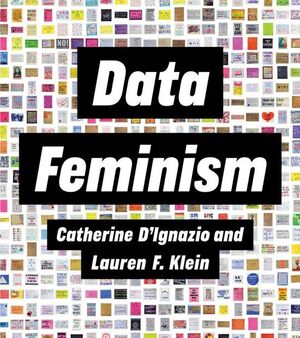
DATA FEMINISM

DATA FEMINISM

CATHERINE D'IGNAZIO / LAUREN F. KLEIN

$ 725.00
IVA incluido
Agotado
Editorial:
MIT PRESS
Año de edición:
2020
Materia
Feminismos
ISBN:
978-0-262-04400-4
Páginas:
328

Today, data science is a form of power. It has been used to expose injustice, improve health outcomes, and topple governments. But it has also been used to discriminate, police, and surveil. This potential for good, on the one hand, and harm, on the other, makes it essential to ask: Data science by whom? Data science for whom? Data science with whose interests in mind? The narratives around big data and data science are overwhelmingly white, male, and techno-heroic. In Data Feminism, Catherine D'Ignazio and Lauren Klein present a new way of thinking about data science and data ethics—one that is informed by intersectional feminist thought.

Illustrating data feminism in action, D'Ignazio and Klein show how challenges to the male/female binary can help challenge other hierarchical (and empirically wrong) classification systems. They explain how, for example, an understanding of emotion can expand our ideas about effective data visualization, and how the concept of invisible labor can expose the significant human efforts required by our automated systems. And they show why the data never, ever “speak for themselves.”

Data Feminism offers strategies for data scientists seeking to learn how feminism can help them work toward justice, and for feminists who want to focus their efforts on the growing field of data science. But Data Feminism is about much more than gender. It is about power, about who has it and who doesn't, and about how those differentials of power can be challenged and changed.


Artículos relacionados

    1
  • KATE MILLETT - GÉNERO Y POLÍTICA
    ROSALÍA ROMERO PÉREZ
    Este estudio aborda el lugar que ocupa Kate Millett (1934-2017) en la historia del pensamiento feminista. Su obra "Política sexual" es una de las tesis doctorales más vendidas e influyentes de la historia. ...
    En stock

    $ 235.00

  • SOBERANÍAS VERNÁCULAS
    LAVINAS PICQ, MANUELA
    las mujeres indígenas son casi invisibles en la política mundial, imaginadas como la antítesis de las relaciones internacionales. Sin embargo, desde sus posiciones de marginalidad ellas están redefiniendo la soberanía en América Latina.En Soberanías Vernáculas, Manuela Lavinas Picq muestra que las mujeres indígenas han sido históricamente actores políticos dinámicos que han mol...
    En stock

    $ 400.00

  • FLORA TRISTÁN
    BOLLA, LUISINA
    This book explores the life and work of Flora Tristan, a 19th century French-Peruvian socialist and feminist. Born in 1803 to a Peruvian aristocrat and a French woman, Tristan experienced both privilege and poverty. The author examines Tristan's role as a precursor in defending women's rights and her critiques of social inequalities affecting women, workers, the poor, and margi...
    En stock

    $ 390.00

  • EL MARXISMO Y LA OPRESIÓN DE LAS MUJERES
    VOGEL, LISE
    ¿Qué significa que cuando hablamos de reproducir la vida bajo el capitalismo estamos hablando de la reproducción de la fuerza de trabajo? Cuarenta años después de su publicación, El marxismo y la opresión de las mujeres es un libro que llega 'justo a tiempo' porque constituye una contribución esencial al desarrollo de una teoría integradora de la opresión de género bajo condici...
    En stock

    $ 515.00

  • ACTIVISMOS FEMINISTAS JÓVENES
    MARINA LARRONDO
    "Los activismos feministas jóvenes son protagonistas centrales en América Latina en estos días. Se trata de sujetas políticas que están llevando adelante transformaciones enormes que cambiarán el mapa de las políticas, los derechos, la construcción de subjetividades y las formas de vincularnos unas con otrxs en las próximas décadas. En este sentido, también, hablamos de un obje...
    En stock

    $ 300.00

  • CEDER NO ES CONSENTIR
    CLOTILDE LEGUILE
    «Ceder no es consentir». Esto pareciera evidente. Sin embargo, es necesario delinear la frontera entre «ceder» y «consentir», pues en ocasiones puede darse una peligrosa proximidad entre ambos. El consentimiento, de hecho, siempre implica un riesgo: nunca puedo saber de antemano a dónde me conducirá. ¿Podría ser entonces que el consentimiento dejara la vía libre a la coerción? ...
    En stock

    $ 390.00