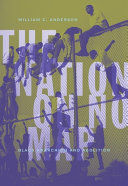
THE NATION ON NO MAP

THE NATION ON NO MAP

BLACK ANARCHISM AND ABOLITION

ANDERSON, WILLIAM C.

$ 385.00
IVA incluido
Editorial:
AK PRESS
Año de edición:
2021
Materia
Antirracismo, Decolonialidad y Sur Global
ISBN:
978-1-84935-434-9
Páginas:
120

Disponibilidad:

  • Librería U-tópicasAgotado
  • FIL GUADALAJARAAgotado

The Nation on No Map examines state power, abolition, and ideological tensions within the struggle for Black liberation while centering the politics of Black autonomy and self-determination. Amid renewed interest in Black anarchism among the left, Anderson offers a principled rejection of reformism, nation building, and citizenship in the ongoing fight against capitalism and white supremacism. As a viable alternative amidst worsening social conditions, he calls for the urgent prioritization of community-based growth, arguing that in order to overcome oppression, people must build capacity beyond the state. It interrogates how history and myth and leadership are used to rehabilitate governance instead of achieving a revolutionary abolition. By complicating our understanding of the predicaments we face, The Nation on No Map hopes to encourage readers to utilize a Black anarchic lens in favor of total transformation, no matter what it’s called. Anderson’s text examines reformism, orthodoxy, and the idea of the nation-state itself as problems that must be transcended and key sites for a liberatory re-envisioning of struggle.

“Shedding new light on the works of Black anarchist thinkers like Lucy Parsons, Kuwasi Balagoon, and Lorenzo Kom’boa Ervin, William C. Anderson invites us to conceive of Black liberation outside the shackles of the nation-state. Attending anew to the intellectual and political itineraries of global Black rebellion, Anderson provides an incisive and highly original exploration of the ongoing urgency of Black anarchist thought and practice in the 21st century. The Nation on No Map is essential reading for anyone interested in building abolitionist futures.”
—Robyn Maynard, author of Policing Black Lives: State Violence in Canada from Slavery to the Present

Artículos relacionados

    1
  • OTRAS ASIAS
    GAYATRI SPIVAK
    En esta magistral indagación en la «centuria asiática», Gayatri Chakravorty Spivak reta al lector a repensar Asia en toda su complejidad política y cultural, en el Sur global y en la metrópoli. ...

    $ 860.00

  • AMNISTÍA 77, LA LUCHA DEL PUEBLO VASCO
    URRITZELKI, MIKEL BUENO
    Las luchas pro-amnistía no han tenido la repercusión historiográfica que, a mi juicio, merecen. Bien es cierto que hay autores que sí las mencionan pero sin entrar en grandes detalles sobre las mismas. Otros las obvian por completo. Esto parece tener como objetivo presentar el periodo de la transición española como tranquilo y pacífico en donde apenas se produjo contestación po...

    $ 245.00

  • BREVE HISTORIA DEL CONFLICTO ENTRE ISRAEL Y PALESTINA
    PAPPÉ, ILAN
    El conflicto entre israelíes y palestinos no comenzó el 7 de octubre de 2023. Tampoco en 1967, cuando Israel ocupó Cisjordania, ni en 1948, cuando se creó el Estado de Israel. Comenzó a finales del siglo XIX, cuando los primeros colonos sionistas llegaron a lo que entonces era la Palestina otomana. En esta iluminadora obra, Ilan Pappé desentraña la historia de dos pueblos que a...

    $ 289.00

  • FALLO DEL CISTEMA
    BEY, MARQUIS
    «Este libro surge del intento de comprender mi frustración antes una frase con la que, en última instancia y salvo algunos matices, estoy de acuerdo. La frase: "Black people cant't be cisgender" [Las personas negras no pueden ser cisgénero], me frustraba, sentía que no era suficiente. Aquí se recoge todo lo que siento en falta: los cómos, los porqués, las implicaciones y los mo...

    $ 480.00

  • LA PLANTACION ESCLAVISTA SE RESISTE A MORIR (1845-1886)
    BARCIA ZEQUEIRA, MARIA DEL CARMEN

    $ 520.00

  • MAÍZ, AUTONOMÍA Y TERRITORIO
    ÓSCAR ARNULFO DE LA TORRE DE LARA
    "Territorio es el espacio que nos pertenece sin ser nuestro. Para ubicar la territorialidad no requerimos un mapa, sino algo más cercano a una fotografía térmica: no hay margen preciso en donde el calor se pierda. La territorialidad no tiene límites como la propiedad; no es contrastable, vive en la imagen que tenemos de un paisaje, en lo que podemos nombrar de él (árboles, anim...

    $ 450.00